GPSR Technical Documentation: What Should Be in the Product File?
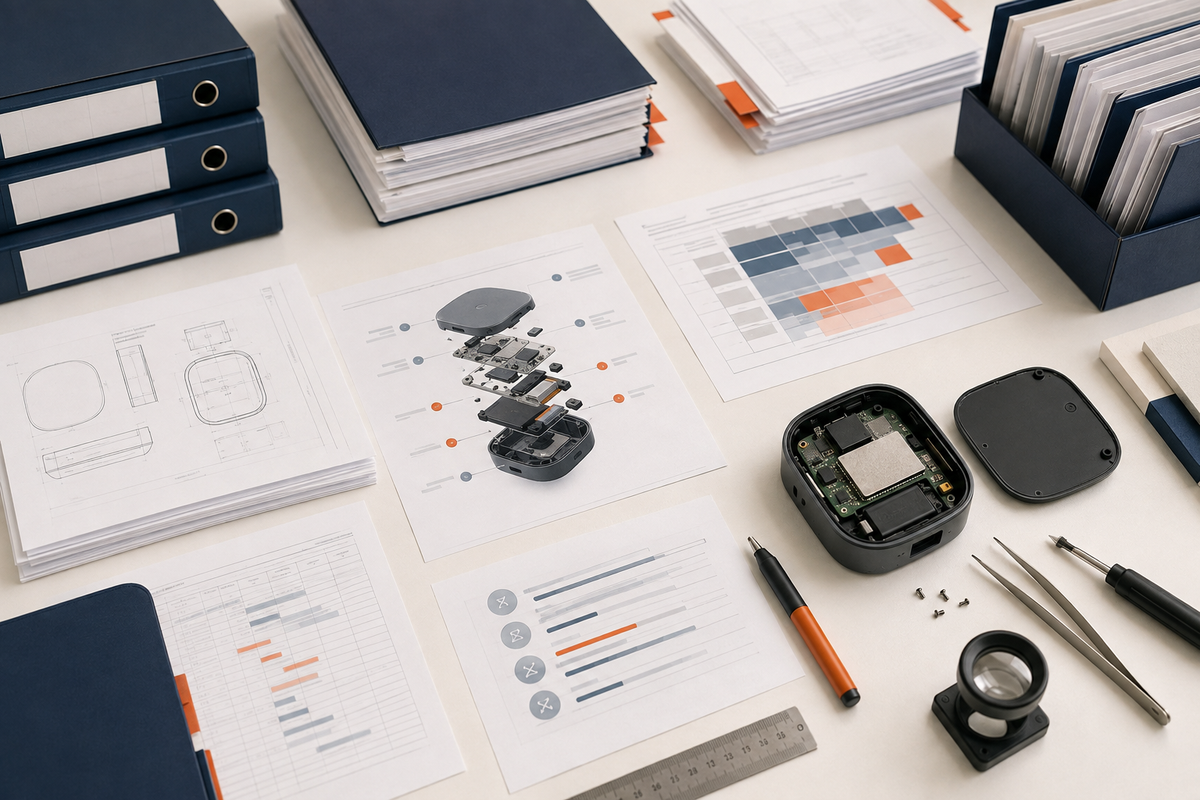
For many consumer-product businesses, "technical file" still means a folder of supplier documents.
There might be a test report, a product photo, an instruction sheet and a Declaration of Conformity if the product is CE marked.
That can look substantial until somebody asks a more important question:
> "Where is the risk analysis for this exact product?"
Under the EU General Product Safety Regulation, applicable since 13 December 2024, manufacturers within scope need to carry out an internal risk analysis and draw up technical documentation before placing the product on the market.
For brands selling consumer products into the EU, the file therefore needs to do more than prove that a laboratory tested something similar.
It needs to describe the product, its relevant safety characteristics, the risks that were considered and the measures used to address them.
Who Does This Apply To?
GPSR technical-documentation duties are particularly relevant to:
Consumer Product Manufacturers: Businesses producing non-food consumer products covered by the GPSR need a documented safety assessment for the product they place on the market.
Private-Label Brands: Putting your brand on a factory product can bring manufacturer responsibilities rather than allowing you to rely passively on the supplier's folder.
UK and Other Non-EU Brands Selling Into the EU: The EU-based economic operator involved with the product will need enough information to perform its own tasks.
Importers: An EU importer needs to verify that the manufacturer has met relevant obligations, including the technical-documentation requirements.
E-commerce and Marketplace Sellers: Online-only sales do not remove the need for the underlying product file.
Brands Selling CE-Marked Products: GPSR can sit alongside sector-specific Union harmonisation legislation for matters and risks not already covered by those rules. The correct interaction needs to be assessed product by product.
The exact documentation depends on the product and its risks, but the core idea is consistent: the file should explain why the product is considered safe.
What Does This Mean in Practice?
Article 9 of the GPSR requires manufacturers to carry out an internal risk analysis and draw up technical documentation.
The documentation should contain at least a general description of the product and the essential characteristics relevant to assessing its safety. Where appropriate to the possible risks, the file should also include the risk analysis and the solutions adopted to eliminate or mitigate identified risks, together with relevant standards or other methods used to meet the general safety requirement.
Manufacturers must keep the technical documentation available to market-surveillance authorities for ten years after the product has been placed on the market.
Start With the Exact Product
A good file begins with identification.
Model number, product name, photographs, variants, materials, dimensions, power source, intended users and intended use can all help define what is actually being assessed.
If the supplier's test report covers Model A but the business sells Model B with a different battery, charger, housing or accessory, the relevance of that evidence needs review.
Risk Analysis Is More Than a Template
A generic matrix headed "low, medium, high" is not enough if it never identifies the hazards created by the product.
The assessment should consider the risks that are relevant to the product, how the consumer might be exposed, foreseeable misuse, vulnerable users where relevant and the measures used to reduce the risk.
Those measures may involve design changes, guards, material choices, warnings, instructions, testing, age restrictions or other controls.
The reasoning should be visible.
Test Reports Are Evidence, Not the Whole File
Testing can be central to the safety case.
It still needs context.
The file should show which product was tested, which standards or methods were used, whether the reports are current and whether production units remain equivalent to the tested sample.
An impressive laboratory logo does not resolve a model mismatch.
Instructions and Warnings Need to Match the Risks
If a risk is controlled partly through consumer information, the instruction manual and warnings form part of the safety story.
The risk analysis should therefore connect logically with the wording that appears on the product, packaging and instructions.
Warnings added at the end of artwork design without reference to the risk assessment can easily be incomplete or inconsistent.
Technical Documentation Needs Change Control
The product does not stop changing after the first launch.
Suppliers replace components. Factories alter materials. Packaging changes. Software or firmware may be updated. A new test report may identify a different limitation.
The business needs a trigger for deciding when the risk analysis, technical documentation, instructions or declarations should be reviewed again.
Common Mistakes Businesses Make
1. Treating a Test Report as the Technical File
A test report answers a defined testing question.
It does not automatically identify every product risk, document foreseeable misuse or explain how the final production version is controlled.
2. Using the Factory's Generic Risk Assessment
A supplier may provide a broad risk sheet covering a product family.
The brand needs to confirm that it relates to the exact model, intended user, accessories and way the product is marketed.
3. Forgetting Non-CE Products
CE marking only applies to product categories covered by specific EU harmonisation rules.
Products outside CE-marking regimes can still fall within the GPSR and still require a product-safety assessment and technical documentation.
4. Copying Standards Without Showing Relevance
A technical file can list many standards and still be weak if nobody has explained which hazards they address or whether the product actually conforms to them.
Standards should support the safety case, not decorate it.
5. Ignoring Foreseeable Misuse
Product safety is not limited to the perfect use described by the marketing team.
How consumers are reasonably likely to use, charge, clean, assemble, store or combine the product can change the risk picture.
6. Failing to Control Product Changes
If the current production version no longer matches the assessed and tested version, the strength of the technical file falls quickly.
Supplier change notification should be part of the compliance process.
Your GPSR Technical File Checklist
Product Description: Can the exact product, model and variants be identified quickly?
Intended Use: Is the intended consumer and intended use clearly defined?
Essential Safety Characteristics: Are the characteristics relevant to safety recorded?
Risk Analysis: Have relevant hazards, exposure and foreseeable misuse been assessed?
Risk Controls: Does the file explain the design, testing, warning or instruction measures used to reduce the risks?
Standards and Methods: Are applicable standards or other assessment methods identified accurately?
Test Evidence: Do reports relate to the exact product and current production version?
Materials and Components: Are safety-critical materials and components controlled where relevant?
Instructions and Warnings: Do the consumer-facing safety messages reflect the risk analysis?
Traceability: Are model, batch, serial or other identifiers managed consistently?
Economic Operator: Can the relevant EU-based economic operator access the documentation needed for its role?
Change Control: Will component, supplier, software, packaging or instruction changes trigger compliance review?
Retention: Is there a system to retain the technical documentation for the required period?
A strong file makes the safety reasoning easy to follow from the product design through to the information given to the consumer.
How Conformity Services Can Help
Conformity Services helps consumer-product brands turn scattered supplier documents into usable product compliance files.
We begin with the exact product, applicable legislation, supply-chain role and intended markets before deciding what evidence is actually required.
Our support can include:
- GPSR technical-file gap assessments
- Product risk assessments and risk-file development
- Supplier-document and test-report reviews
- Standards and legislation mapping
- Label, warning and instruction reviews
- Declaration of Conformity support where applicable
- EU economic-operator documentation readiness
- Product change-control and portfolio systems
- Ongoing outsourced product-compliance support
The aim is not to generate documents for the sake of volume.
It is to create a file that can withstand a sensible question from an importer, marketplace, retailer or market-surveillance authority.
Final Thoughts
The best technical documentation tells a coherent story.
This is the product. These are the risks. This is the evidence. These are the controls. This is the version we are selling.
When those links are missing, businesses end up relying on isolated certificates and hoping that somebody else already asked the right questions.
GPSR has made the need for documented internal risk analysis much harder to ignore.
For growing brands, that is an opportunity to build a product-file system that works across future launches rather than recreating a folder from scratch every time.
Sources and official guidance
This article provides general information, not legal advice. GPSR technical documentation should reflect the specific product, foreseeable risks and any sector-specific legislation that also applies.
- EUR-Lex: Regulation (EU) 2023/988 on general product safety
- Business.gov.uk: EU General Product Safety Regulation guidance
- European Commission: practical GPSR implementation guidelines
Is Your GPSR Product File Complete?
Contact Conformity Services to discuss your product, supplier documents, risk assessment and EU market route.
We can identify the gaps, prioritise the missing evidence and help build technical documentation around the product you are actually selling.
Let's turn the supplier folder into a defensible product file.