Novel Ingredients in Food Supplements: What Brands Must Check Before Launch
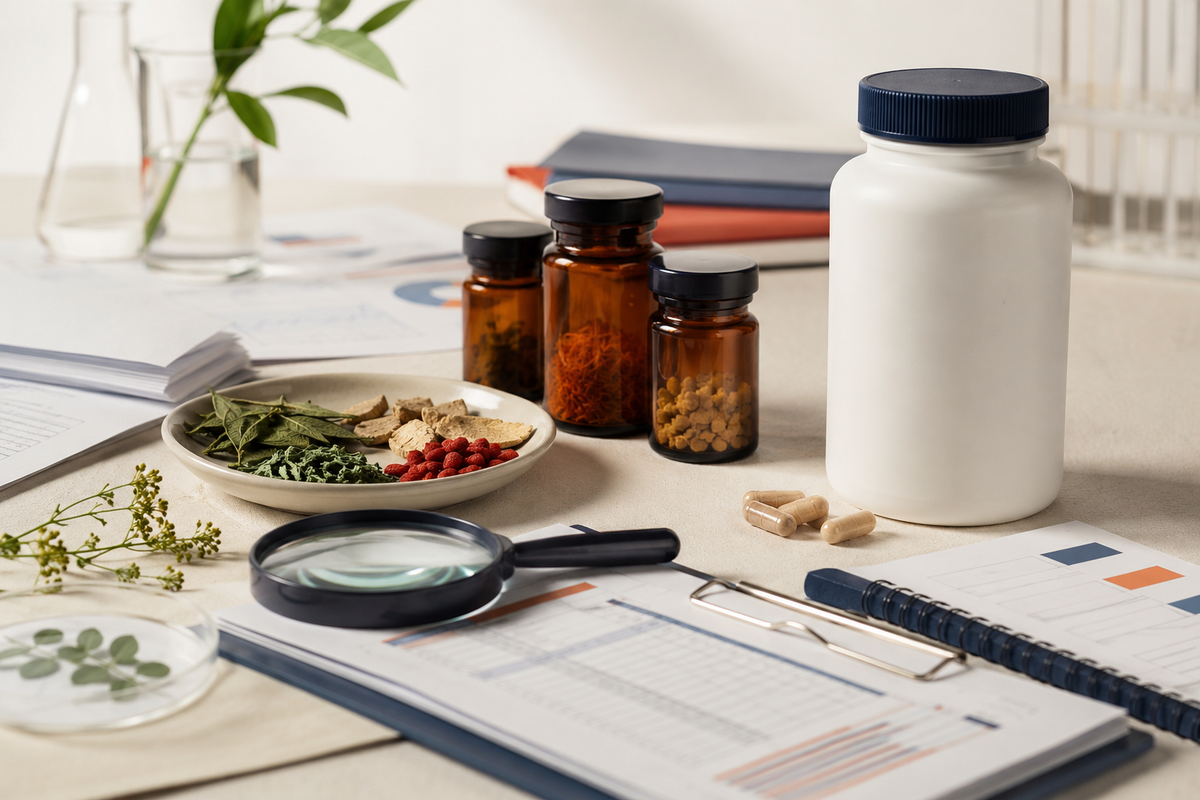
A new supplement ingredient can look like a brilliant commercial opportunity.
It may already be appearing in products in the United States or Asia. A supplier may describe it as natural, well researched and suitable for food supplements. The ingredient might even be generating plenty of interest on social media.
Then somebody asks a much less exciting question:
“Can we legally place this ingredient on the UK market?”
That is usually where the conversation becomes more complicated.
An ingredient can be safe, natural and commercially attractive while still requiring assessment under the novel-food rules. It can also be familiar in one form but novel in another because the source material, extraction process, composition or intended use has changed.
For supplement brands, novelty should be checked before the formulation is approved, the packaging is printed or the first production order is placed.
Who Does This Apply To?
This matters to far more businesses than those selling unusual laboratory-created ingredients.
Food Supplement Brands: Products containing botanicals, extracts, fungi, algae, fermentation products, newly developed nutrient sources or ingredients popular in overseas markets may need a closer look.
Importers: An ingredient being widely sold abroad does not prove that it can be lawfully marketed in Great Britain or the European Union.
Private-Label Businesses: A manufacturer may offer a ready-made formula and call it compliant. The brand still needs to understand what that statement covers and which market it relates to.
Overseas Brands Entering the UK: Products developed for the US, Middle East or Asian markets often contain ingredients, forms or daily doses that need separate assessment before a UK launch.
Contract Manufacturers: Manufacturers need a reliable way to assess new ingredients before adding them to stock formulations offered to several customers.
The issue is not limited to ingredients nobody has heard of.
Sometimes the plant is familiar, but the particular part of the plant is not. Sometimes the ingredient has a history in traditional medicine but not as food. In other cases, an older food ingredient has been concentrated or processed in a completely different way.
What Does This Mean in Practice?
In Great Britain, a novel food is broadly a food that was not consumed to a significant degree in the UK or EU before 15 May 1997 and falls within the relevant categories in the legislation.
That date is important, but it is not the only question.
A proper novelty assessment looks at the identity of the ingredient, the source, the part used, how it is produced, its composition and the way the business intends to use it.
The Ingredient Name Is Only the Starting Point
Two ingredients can share the same common name and still be materially different.
A simple plant powder is not necessarily the same as a highly selective extract. An ingredient made through a new fermentation process may not have the same status as the conventional ingredient it is designed to resemble. A mushroom fruiting-body powder may need to be considered separately from a mycelium extract.
This is why a one-line supplier statement saying “non-novel” is rarely enough on its own.
Authorisation Has Conditions
Where an ingredient is authorised as a novel food, the authorisation should be checked carefully.
The permitted specification, food categories, maximum use levels, target population, labelling requirements and any data-protection position may all matter. Seeing the ingredient name on an authorised list does not automatically mean that every version, dose and use of that ingredient is covered.
Great Britain and the EU Are Separate Markets
Since the UK left the EU, a decision made for the EU after the end of 2020 does not automatically authorise the same novel food in Great Britain.
Northern Ireland also needs separate consideration because EU novel-food rules continue to be relevant there in important circumstances.
For a brand planning a UK and EU launch, the market route should therefore be checked rather than assumed.
Common Mistakes Businesses Make
1. Assuming “Natural” Means Non-Novel
Novel-food status is not a judgement about whether an ingredient is natural or artificial.
Chia seeds and baobab are natural. They have also been through novel-food authorisation routes. The real question is whether the relevant food had a significant history of consumption in the required market before the cut-off date, or is already authorised for the proposed use.
2. Treating the EU Novel Food Catalogue as an Approval List
The catalogue is useful, but it is indicative and not exhaustive.
An ingredient being absent from the catalogue does not prove that it is non-novel. A short catalogue entry may also fail to answer questions about a particular extract, plant part or production method.
3. Relying Entirely on the Supplier
The supplier should provide the identity, specification, production process and evidence supporting the ingredient.
But the supplement brand or responsible food business still needs to know whether that evidence supports the intended product and market. A document prepared for another customer, dose or country may not answer the right question.
4. Confusing a Safety Report With Market Authorisation
Toxicology reports, certificates of analysis and published studies can be important.
They do not, by themselves, create permission to sell an unauthorised novel food. Safety evidence and legal market status are connected, but they are not the same thing.
5. Checking Novelty After the Launch Work Is Finished
By the time the label, website and marketing campaign are complete, the business is emotionally and financially committed to the formula.
That makes an unfavourable answer much harder to deal with.
Novelty is best treated as an ingredient-screening question at the start of development, not a final artwork check.
Your Practical Novel Ingredient Checklist
Identity: Do you have the full scientific and common name of the ingredient?
Source: Do you know the organism, plant part, strain or source material used?
Manufacturing Process: Is it a powder, extract, isolate, fermentation product or chemically modified form?
Specification: Does the supplier provide a current specification with relevant marker compounds and contaminants?
History of Consumption: Is there credible evidence of significant food use before 15 May 1997?
Intended Use: Is the evidence relevant to food supplements, ordinary foods or both?
Authorisation: If novel, is the ingredient authorised for the proposed market and conditions of use?
Dose and Population: Does your daily dose and target consumer fit within the authorised or assessed conditions?
Market: Have Great Britain, Northern Ireland and the EU been assessed separately where necessary?
Claims: Are the marketing claims lawful and supported independently of the ingredient’s novelty status?
Change Control: Will the supplier notify you if the source, process or specification changes?
A useful novelty assessment should leave the business with an evidence trail, not just a yes or no in an email.
How Conformity Services Can Help
At Conformity Services, we help supplement brands assess novel ingredients before they become expensive launch problems.
We start by defining the ingredient properly. That means looking at its source, plant or organism part, manufacturing process, composition, proposed daily dose and intended markets.
Our support can include:
- Novel-food status and evidence reviews
- Supplier document and ingredient specification assessments
- Great Britain and EU market-status checks
- Formula and daily-dose reviews
- Novel-food authorisation gap assessments
- Food supplement label and claims reviews
- UK Food Business Operator support
- Ongoing outsourced supplement-compliance support
Sometimes the evidence supports the intended use and the project can move forward.
Sometimes the answer is to use a different ingredient form, adjust the market plan or obtain stronger evidence before committing to production.
Either way, it is better to know early.
Final Thoughts
The most difficult part of a novel-ingredient review is often not the law.
It is working out exactly what the ingredient is.
A familiar name, a polished brochure and a collection of scientific studies can create confidence without answering the market-access question.
Before building a supplement around a new ingredient, make sure the identity, history, authorisation and intended use all line up.
That one check can save a brand from redesigning a product after everything else has already been approved.
Sources and official guidance
This article provides general information, not legal advice. Novel-food status and authorisation conditions should be checked for the specific ingredient, intended use and target market.
- Food Standards Agency: novel foods authorisation guidance
- Food Standards Agency: GB novel food authorisations
- European Commission: novel food guidance
Considering a New Supplement Ingredient?
Contact Conformity Services to discuss the ingredient, formulation and markets you are planning to enter.
We can review the available evidence, identify the gaps and help you decide whether the product is ready to move forward.
Let’s check the ingredient before you commit to the production run.